

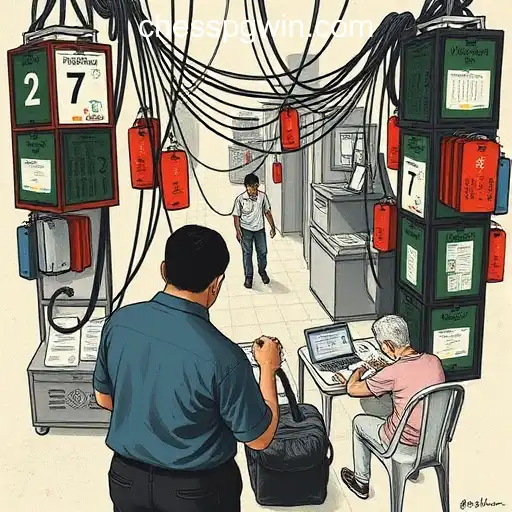
The Intricate World of Jueteng: A Detailed Examination
Jueteng, a widely known illegal numbers game, has been a pervasive issue in certain areas of Southeast Asia, particularly the Philippines. This traditional yet unlawful practice has a vast and deep-rooted presence in society, impacting both the local economy and socio-political landscape. It is a situation fraught with complexity, where legality, culture, and economy intersect in contentious ways.
Historical Roots of Jueteng
The origin of jueteng can be traced back to the colonial period under Spanish rule. Initially a game of chance played by Chinese immigrants, it gradually integrated into Filipino culture, becoming a staple of daily life in many communities. With numbers drawn randomly, the allure of betting small amounts yet winning big attracted widespread participation, making jueteng a popular pastime and an established form of entertainment.
Structure and Mechanics
Jueteng operates on a simple numerical betting system. Punters place their bets on any combination of numbers between 1 and 37. The winning combination is drawn twice daily, providing multiple opportunities for participants to experience both thrill and financial gain. Despite its clandestine nature, the game has a well-organized hierarchy, from the low-level kubrador or collectors to the jueteng lords at the top, each playing a crucial role in the seamless functioning of the entire operation.
Socio-Economic Impact
While jueteng provides a source of income to many, particularly to those in lower economic strata, the implications go beyond just financial aspects. It has ingrained itself within the local economies, where collectors and operators find sources of livelihood in an otherwise struggling economic environment. However, this comes at a societal cost, fostering environments where legality is often overshadowed by the need for survival and opportunity.
Cultural Significance
For many, jueteng is more than just an illegal numbers game; it’s a socio-cultural phenomenon. It represents hope - the optimism that financial woes can be alleviated swiftly with the right numbers. Beyond material gain, jueteng serves as a social binder, a community activity where people share stories, dreams, and the collective excitement of chance. Its persistent existence reflects a cultural acceptance and adaptation of seemingly contentious practices within the traditional societal fabric.
Legal and Political Implications
The existence of jueteng poses significant challenges to law enforcement and governance. With its deep-seated roots, attempts to eradicate the practice have often met with resistance and controversy. Moreover, allegations of corruption among officials, purportedly benefiting from jueteng revenues, have surfaced frequently. This intertwines the game further within the political apparatus, creating a complex web that resists straightforward solutions.
Comparative Analysis with Other Gaming Practices
Jueteng should not be viewed in isolation but alongside similar gaming practices globally. For instance, when looking at regulated games such as lotteries or the rise of online gaming platforms like CHESS PG rodadas grátis Brasil, one sees a spectrum ranging from legality to social acceptance. Unlike regulated platforms, jueteng operates in the shadows, devoid of governmental oversight and thus subject to exploitation and manipulation.
The Role of Advanced Technologies
As technology evolves, the framework within which games of chance operate transforms significantly. Digital advancements offer avenues for organized gaming activities to move towards legitimate, regulated digital platforms. By referencing innovations like CHESS PG rodadas grátis Brasil, there's potential for illegal activities like jueteng to find parallels in structured environments, provided there is a guided path to legalization and oversight.
The Battle for Regulation
Graceful transition from illegality to regulation involves both political will and societal readiness to adapt. History has shown that outright bans often lead to underworld monopolies, whereas structured policies can guide activities towards transparency and controlled recreation. Engaging with local communities, raising awareness about potential alternatives, and implementing educational programs are critical steps to gradually steer public behavior towards legal and economically beneficial practices.
The case of jueteng serves as a profound example of how deeply intertwined cultural practices demand nuanced and considered approaches rather than simplistic legal pronouncements. It is within this intricate matrix that solutions for integration, regulation, and societal wellness must be sought and nurtured.